


Parasitism in nature is a widespread phenomenon.It refers to the coexistence of two or more organisms that are not interconnected in any way, but instead form a chain of host-parasite relationships.The second side uses the first as a source of food and habitat.Often one person has to act as the owner.
Classification
Human parasites include all creatures, except bacteria and viruses, that live and feed at their expense, causing harm.There are many creatures that can live on or inside the human body.They can be divided into two large groups:
- endoparasites;
- ectoparasites.
The former exist within the body, in a variety of physiological systems and organs.The latter live on the body like mites or lice, or attack like bedbugs.
Endoparasite group
A very large group that includes protozoa, helminths and some other parasites.
Protozoa or protozoa
They are called that because most of them are single-celled microorganisms.The human body can be affected by about 50 species of single-celled organisms.Protozoan infections cause various diseases.
Infection with them can occur in different ways:
- during sexual contacts;
- along with food;
- through insect bites, etc.
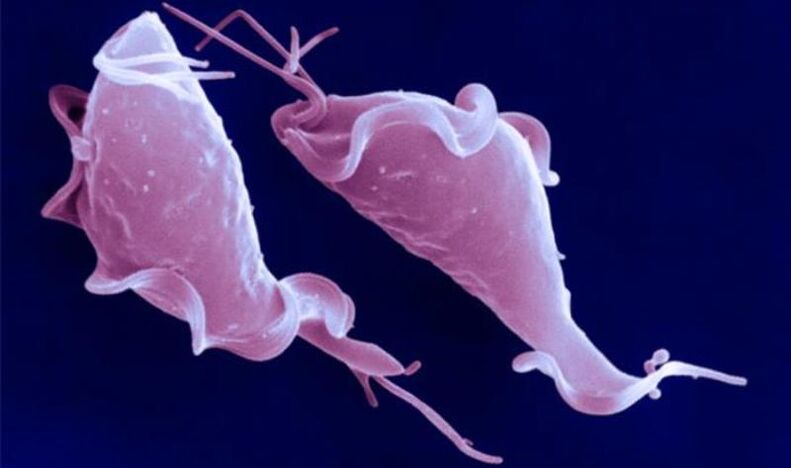
The most common sexually transmitted parasitic infection is trichomoniasis.Its causative agent is Trichomonas vaginalis.According to statistics, two out of every hundred people on the planet are infected with trichomoniasis.
The presence of trichomoniasis can be recognized by the following symptoms.Women's experience:
- abundant foamy discharge of yellowish-greenish color;
- burning, itching and swelling of the genitals;
- hyperemia of the vaginal mucosa, etc.
Signs of the disease in men are less pronounced:
- pain when urinating;
- discharge from the urethra;
- sometimes blood in the urine.
Trichomonas are dangerous because they can cause various complications (infertility, cervical cancer, etc.).
In addition, they can change shape, disguise themselves as other cells in the body (lymphocytes, platelets) and provide shelter for intracellular microorganisms (viruses, chlamydia, etc.), making their identification and destruction difficult.
Antimicrobial drugs from the 5-nitroimidazole group are mainly used for treatment.
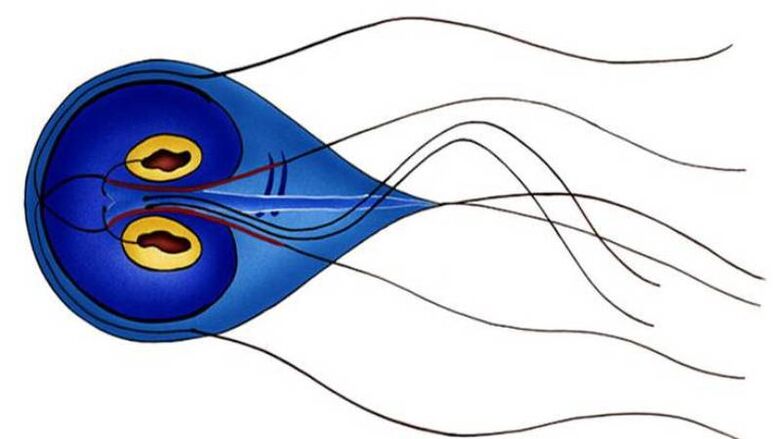
Another common disease of protozoan origin is giardiasis.The causative agent is lamblia.Parasitizes the small intestine.Penetrating the large intestine, Giardia loses its mobility and turns into cysts (a form of temporary stable existence), which are excreted together with feces.
Infection occurs through consumption of food and water contaminated with cysts.
Cysts can also enter the body through dirty hands.For this reason, giardiasis usually affects young children (from 1 to 4 years old), who are not willing to observe the rules of personal hygiene..
The presence of Giardia can be suspected by intestinal disorders (constipation alternating with diarrhea, bloating, dull noises, nausea, pain in the upper abdomen) and general malaise (lack of appetite, weakness, irritability, etc.).
Giardiasis is treated with the same medications as trichomoniasis.
Other diseases caused by protozoan parasites:
- amoebiasis;
- malaria;
- leishmaniasis;
- toxoplasmosis;
- sleeping sickness, etc.
Helminths
People often call them worms.More than 400 types of parasitic worms can live in humans.The most common are pinworms and human nematodes.
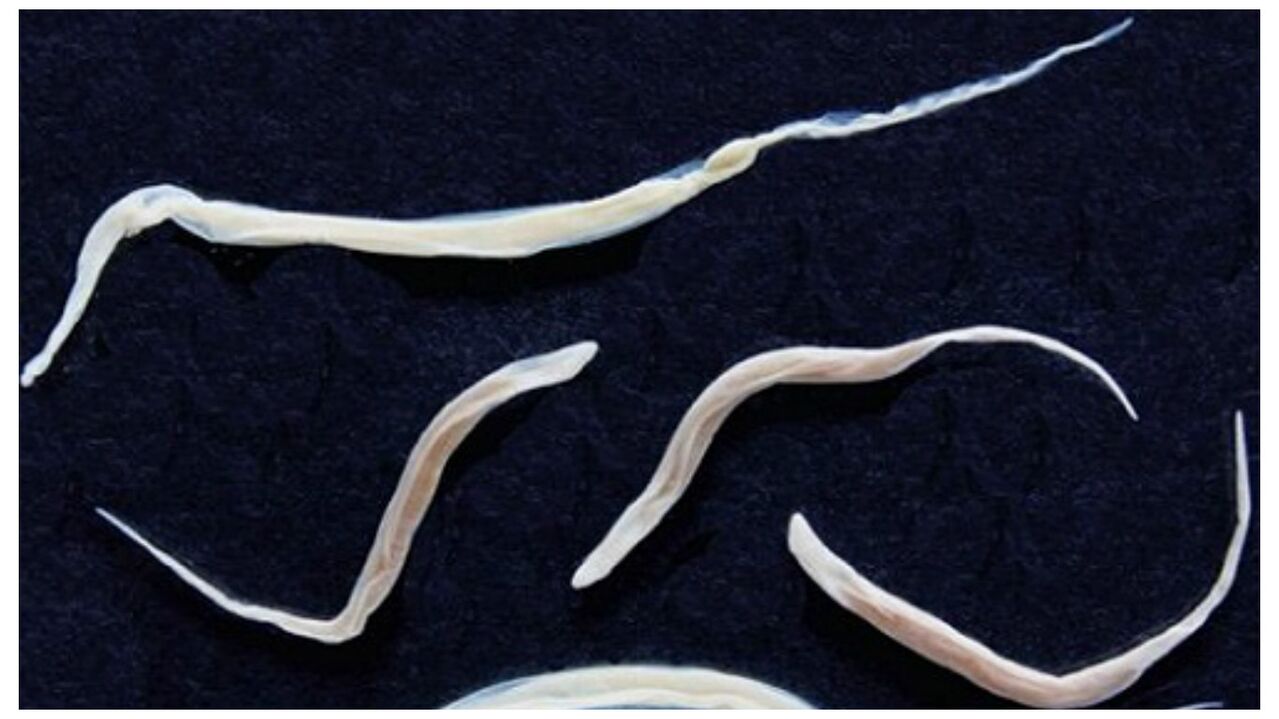
Pinworms are small round worms.Males reach a length of 5 to 6 millimeters, females 10. They are the cause of enterobiasis.They live in the cecum and appendix.Pinworms are not difficult to detect because they cause intense itching in the anal area.This is due to the fact that the females come out through the anus at night and lay eggs on the skin.
When scratched, the eggs get under the nails and into the hands.Then the person himself spreads them, touching various things with dirty hands.
Therapy is carried out with anthelmintic drugs.All family members should receive treatment.In addition to medications, hygiene is very important in this case, since enterobiasis is a classic disease of dirty hands.Nails should be cut, hands should be washed thoroughly, bed linen should be washed in hot water and ironed with a hot iron.The apartment needs wet cleaning.
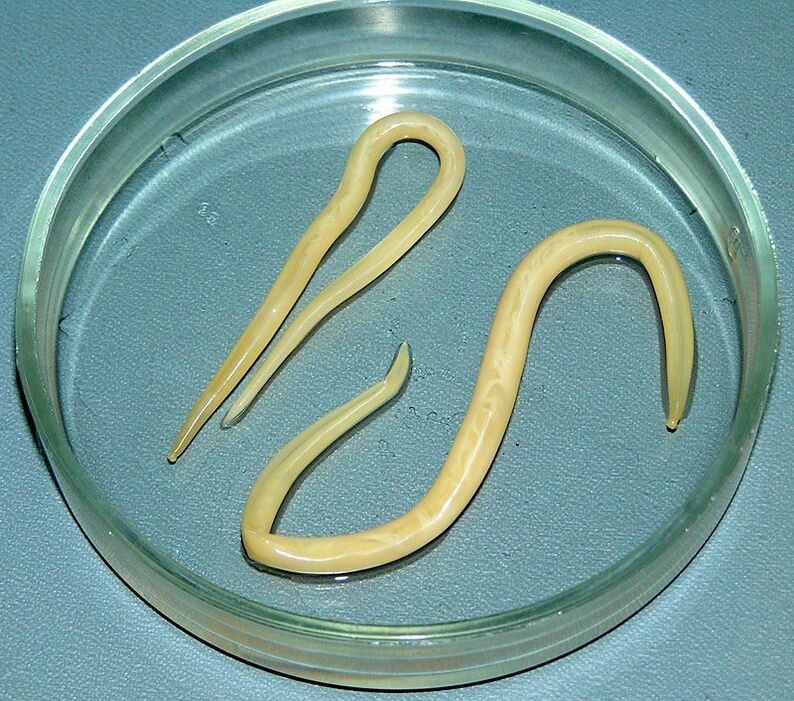
The human roundworm is another type of parasitic roundworm.They are much larger and more dangerous than pinworms.The length of females can reach 40 centimeters, males are smaller.
Ascaris eggs enter the body in the same way as pinworm eggs.In the small intestine, the eggs turn into larvae, which through its walls penetrate into the circulatory system.Then migration throughout the body begins.The bloodstream carries them to the liver, the right side of the heart, the lungs and even the brain.
By moving through these organs, the larvae create a huge number of problems for humans.In the digestive system they damage the liver, intestines and pancreas.
They can block the bile ducts and cause acute cholangitis and pancreatitis.
Being in the heart, they cause pain, local bleeding and the development of coronary artery disease.
The results of staying in the lungs are cough, wheezing, shortness of breath, bronchitis, etc.
When moving through the brain, neuroses, dizziness, convulsions and epileptic-type seizures can be observed.
Other symptoms of ascariasis:
- nausea and vomiting;
- rapid fatigue during physical work;
- loss of appetite and body weight;
- diarrhea;
- pain in the abdomen;
- skin rash and itching.
Various anthelmintics are used to combat intestinal worms.
Other common helminthiasis include:
- schistosomiasis;
- trichinosis;
- echinococcosis;
- clonorchiasis;
- opisthorchiasis;
- hookworm infection, etc.
Other endoparasites
This group contains parasites that are rarely found.For example, the larva of the horsefly, which lives in Central and South America, can cause dermatobiasis.The female horsefly lays eggs in the abdomen of mosquitoes, mosquitoes and ticks.When bitten by insects, larvae emerge from the eggs and hide in the skin.Inflammation begins and pus forms.After a certain time, the larvae leave the person.
The sand flea, which causes tungiasis, acts in a similar way.But here a fertilized female is introduced into the epidermis.
Ectoparasites
There are fewer of them than endoparasites.The most famous of them:
- lice;
- ticks.
Ectoparasites also include fleas, bed bugs, and mosquitoes.But they never live directly on or in a person.They attack a person and, having had their fill, abandon him.
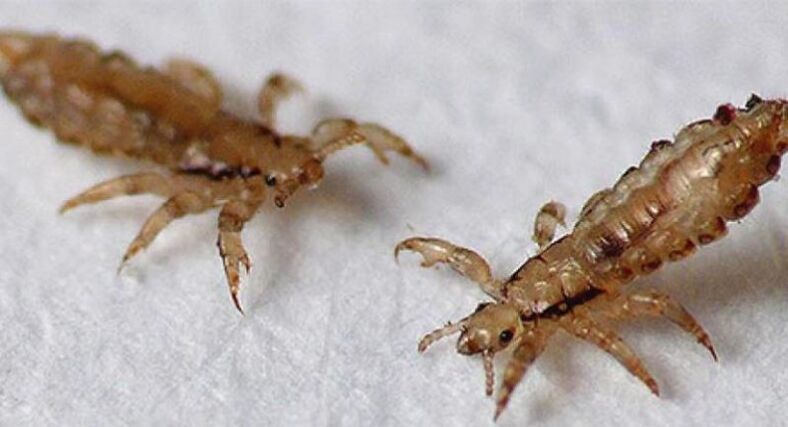
Three types of lice parasitize humans (head, body and pubic).
Parasites, contrary to popular belief (they love dirt), any clean person can contract them.
Regardless of the type of lice, its symptoms are the same:
- itching;
- crying (release of serous exudate due to damage to the epidermis);
- scabs in painful areas;
- pyoderma (purulent skin lesion).
Different types of lice prefer to live on different parts of the body, hence the classification of lice.
Sometimes it is a mixed type, for example, when there are head and pubic parasites in the body.
The most dangerous are body lice.They can be carriers of typhus, relapsing fever and Volyn fever.Lice cannot tolerate other dangerous diseases (HIV, hepatitis), since viruses that enter the intestinal tract along with the blood of an infected person are digested.
It is better not to use home remedies (kerosene, dichlorvos) to get rid of lice.The pharmaceutical industry offers a wide selection of anti-pediculosis drugs in the form of ointments, creams, sprays and shampoos.They are based on insecticides.A fine comb is included with the preparations to comb out the nits.Disinfestation of clothing and linen is also necessary.
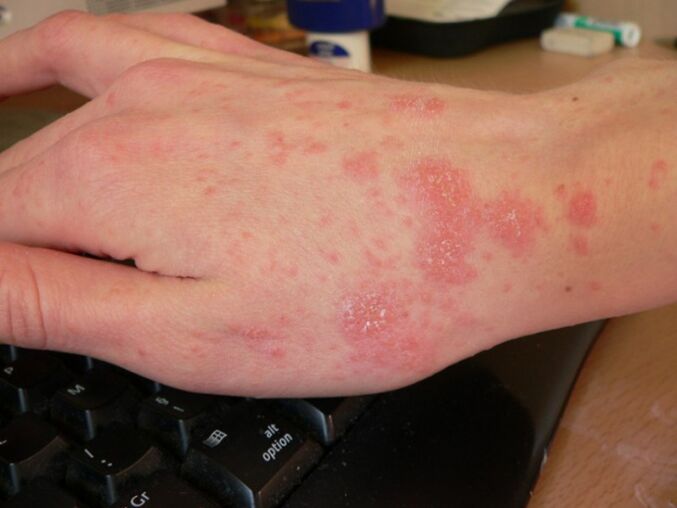
The scabies, or itch, mite causes scabies, a contagious skin disease.You can get infected in the most random way, for example, by holding on to the railing of a public building.Infection is guaranteed through close physical contact, particularly sexual contact.The tick takes 15 minutes to penetrate the epidermis.The insect is very small in size (one to three tenths of a millimeter).Ticks come to the surface twice in their lives.The first time in the form of a larva it penetrates another place, the second time - to mate.
The main problems for humans are caused by women.They lay eggs during the first half of the day and at night they gnaw passages in the epidermis.
Recognizing scabies is easy.It is accompanied by unbearable itching, which sharply intensifies in the afternoon and evening hours.Inflamed linear scabies can be seen on the skin.People prone to allergies experience severe allergic reactions.Due to strong scratching, the skin becomes saturated with fluid, swells and sometimes becomes covered with bloody scabs.
Scabies is treated with antiscabbiotic agents.They are available in the form of emulsions, sprays and creams.It is necessary to treat not only the affected areas, but also the entire body (except the face and scalp).They wash the body before or after therapy.You cannot wash during it.If there are scabs on the body, they are softened and removed.Rub in the cream or emulsion for at least two minutes.Do not wash your hands for three hours after using the product.You are allowed to shower every other day.Bed linen is ironed, furniture and clothing are treated with an antiseptic.After two days, the course is repeated.
Another intradermal mite is the acne iron.It also has a very small size (maximum 0.5 millimeters).It lives in the mouth of the hair follicles, sebaceous and meibomian gland ducts (on the edges of the eyelids).The disease in this case is called demodicosis.
90 percent of people suffer from acne, but the pathological process does not always begin, mainly when the immune system is weakened or as a result of severe stress.
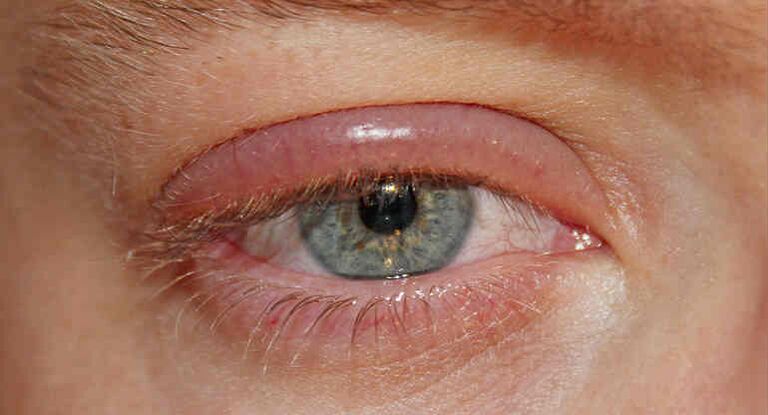
In the initial stage, acne, rashes and ulcers appear.When follicles are damaged, eyelashes and hair fall out.As the disease progresses, the skin changes color to earthy gray and becomes lumpy.Demodicosis is dangerous due to the addition of secondary infection and scar formation.
The treatment of demodicosis is quite complicated.The disease is chronic in nature, as long-term treatments and high concentrations of medication are required.The intensive use of antiparasitic drugs has a negative effect on the state of the liver and hematopoietic processes.However, long-term stable remission can be achieved.The most effective is the treatment carried out by a dermatologist and a dermatocosmetologist simultaneously.
If you suspect a parasite infection, you should not try to identify them yourself and check the effectiveness of antiparasitic medications or home remedies.It is easier to go to the doctor and have all the necessary tests done.A properly prescribed treatment will cleanse the body of these harmful parasites.